



Overview: Balanced Salt Solutions
Balanced salt solutions (BSS) are aqueous formulations designed to maintain physiological osmotic balance, pH stability, and ionic composition for biological systems. These solutions are commonly used in cell culture, tissue perfusion, physiological assays, and live-cell experiments. Boston BioProducts offers a variety of BSS, including Hank’s, Earle’s, Krebs-Ringer, Tyrode’s, and DPBS variants, with multiple options for calcium/magnesium content, phenol red indicators, and HEPES buffering.
What Are Balanced Salt Solutions?
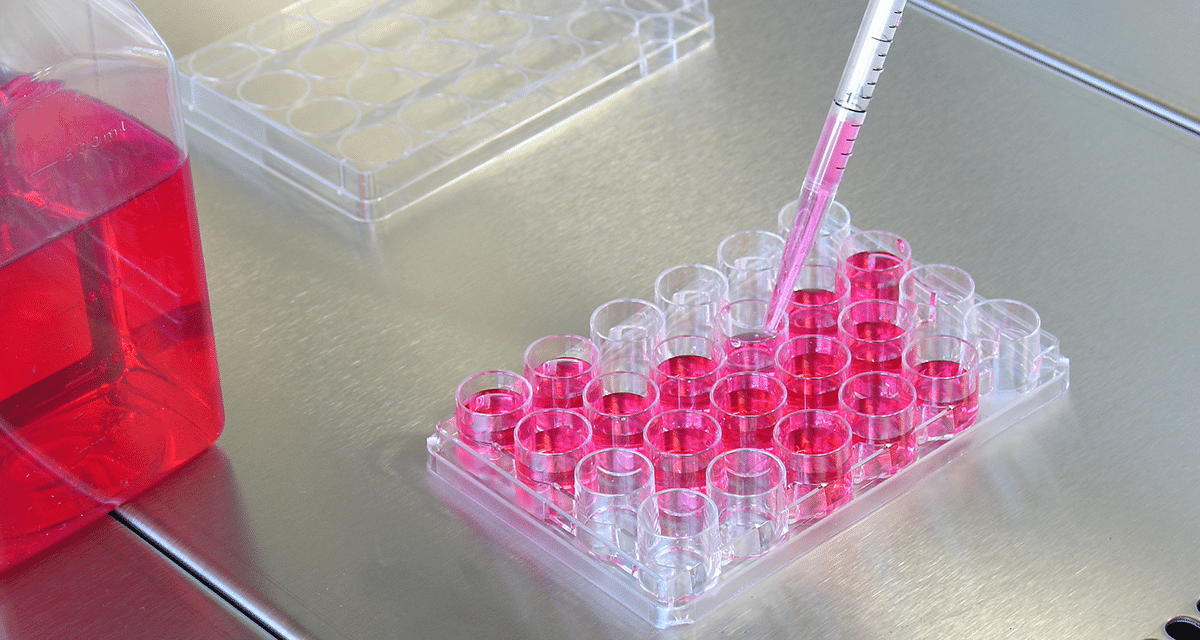
Balanced salt solutions are carefully formulated to mimic physiological ionic conditions while maintaining osmotic and pH stability. They serve as basal support for cells and tissues, providing essential ions such as Na⁺, K⁺, Ca²⁺, Mg²⁺, and Cl⁻. Some solutions include pH indicators like phenol red, or HEPES buffering for stable pH outside CO₂ incubators.
Earle’s Balanced Salt Solution (EBSS)
EBSS contains sodium chloride, potassium chloride, calcium chloride, magnesium sulfate, sodium phosphate, sodium bicarbonate, and glucose. It is widely used for cell culture and tissue dissociation.
Hank’s Balanced Salt Solution (HBSS)
HBSS includes similar components to EBSS, with varied concentrations. It is used in cell culture and tissue dissociation. HBSS with calcium and magnesium supports cell adhesion and helps reduce unwanted aggregation.
| CAT# | Product Name |
|---|---|
| BSS-245 | Hank's Balanced Salt Solution, HBSS (10X, with Metal Mix) |
| BSS-215 | Hank's Balanced Salt Solution, HBSS |
| BSS-210 | Hank's Balanced Salt Solution, HBSS (with Phenol Red) |
| BSS-240 | Hank's Balanced Salt Solution, HBSS (10X, with Phenol Red) |
| BPS-505 | Hank's Balanced Salt Solution, HBSS (with Calcium, Magnesium, Phenol Red) [BioProcess Grade] |
Krebs-Henseleit Buffer
This buffer is ideal for perfusion of isolated mammalian hearts and is the gold standard for Langendorff perfusion studies.
Krebs-Ringer Solution
Used in calcium imaging and in vitro studies, it supports prolonged survival of polymorphonuclear leukocytes (PMNs).
| CAT# | Product Name |
|---|---|
| BSS-260 | Krebs-Ringer Solution (HEPES Buffered) |
Tyrode’s Balanced Salt Solution (TBSS)
TBSS is commonly used in physiological experiments, cell washing, tissue culture, and preservation. Modified formulations with glucose support metabolism, especially in cardiac tissues.
| CAT# | Product Name |
|---|---|
| BSS-370 | Tyrode's Solution (with HEPES & 0.25% BSA) |
| BSS-365 | Tyrode's Solution (with HEPES & 0.25% BSA, without Calcium) |
| BSS-375 | Tyrode's Solution (with HEPES, without Calcium) |
| BSS-355 | Tyrode's Solution (with HEPES, with Calcium) |
| BSS-340 | Tyrode's Solution |
| BSS-350 | Tyrode's Solution (with BAPTA) |
Using the correct BSS ensures cell viability, enzyme activity, and reproducibility across experiments.
How to Choose the Right Balanced Salt Solution
- Define your experimental goals – Cell washing, tissue perfusion, live-cell imaging, physiological assays, or electrophysiology.
- Consider ionic composition – Does your experiment require calcium/magnesium? Are divalent cations inhibitory for your procedure?
- pH monitoring – For experiments outside CO₂ incubators, consider HEPES-buffered options for stable pH.
- Phenol red presence – Include or exclude based on whether pH indicator is needed or interference must be avoided.
- CO₂ requirement – Choose HBSS for non-CO₂ environments and EBSS for CO₂ incubators.
- Application-specific selection – Use the selection guide table above to quickly match solution to workflow.
Formulation Features
| Feature | Why It Matters | When to Choose |
|---|---|---|
| With Calcium & Magnesium | Maintains adhesion, signaling, membrane integrity | Cell culture, tissue maintenance, signaling studies |
| Without Calcium & Magnesium | Reduces aggregation, prevents premature adhesion | Trypsinization, cell dissociation, flow cytometry prep |
| With Phenol Red | Provides visual pH indicator | Routine monitoring of pH changes |
| Without Phenol Red | Avoids interference with fluorescence | Microscopy, imaging, hormone assays |
| HEPES Buffered | Maintains pH stability outside CO₂ incubators | Live-cell imaging, microscopy, open-bench experiments |
Balanced Salt Solutions Selection Guide
| Balanced Salt Solution | Typical Applications | Ca²⁺ / Mg²⁺ | Phenol Red Option | CO₂ Requirement | HEPES Option | When to Choose |
|---|---|---|---|---|---|---|
| Hank’s Balanced Salt Solution (HBSS) | Cell washing, counting, tissue transport, short-term handling | With or without | With or without | No CO₂ required | Optional | Best for handling outside incubators or washing steps |
| Earle’s Balanced Salt Solution (EBSS) | Cell culture maintenance, tissue dissociation | With or without | With or without | 5% CO₂ incubator | Sometimes | Use inside CO₂ incubators |
| Krebs-Henseleit Buffer | Cardiac physiology, organ perfusion | Usually with | Usually without | Gas equilibration | Sometimes | Metabolic and physiological tissue studies |
| Krebs-Ringer Solution | Calcium signaling, immune cell studies, physiology assays | Usually with | Usually without | No strict requirement | Often HEPES | Ion transport and cellular physiology experiments |
| Tyrode’s Solution | Cardiac electrophysiology, tissue perfusion | Usually with | Usually without | May require oxygenation | Sometimes | Electrophysiology and cardiac tissue experiments |
| DPBS / PBS (modified balanced salts) | Cell washing, reagent prep, microscopy, flow cytometry | With or without | With or without | No CO₂ required | Optional | General washing and sample prep |
Tips & Troubleshooting
Tips
- Always use high-purity water and sterile technique for solution preparation.
- Check pH after temperature equilibration; pH can shift slightly with heat.
- For imaging or fluorescence assays, prefer phenol red-free formulations.
- Monitor cell viability when switching formulations, especially with Ca²⁺/Mg²⁺ content changes.
- Store solutions at recommended temperatures to prevent microbial contamination.
Troubleshooting
| Feature | Why It Matters | When to Choose |
|---|---|---|
| Cells fail to adhere | Using BSS without Ca²⁺/Mg²⁺ | Switch to formulation with Ca²⁺/Mg²⁺ |
| pH drift during imaging | Non-HEPES BSS outside incubator | Use HEPES-buffered solution |
| Precipitate formation | Incorrect storage, high ion concentrations | Prepare fresh, filter sterilize, store properly |
| Fluorescence interference | Phenol red present | Use phenol red-free formulation |
Frequently Asked Questions
Summary
Balanced salt solutions are essential tools for maintaining cell physiology, ionic balance, and pH stability in a variety of biological experiments. Use the selection guide table, formulation tips, and troubleshooting advice above to choose the right solution for your workflow.
Boston BioProducts’ Balanced Salt Solution & Custom Formulation
- Browse our catalog of pre-formulated Balanced Salt Solutions (HBSS, EBSS, Krebs etc), each optimized for different applications
- Use our Custom Manufacturing / Reagent Builder to design a balanced salts solution tailored to your specific needs